Yes, traditional Indian decor and modern minimalism can share a room beautifully—but only through deliberate selection. The consensus across interior designers and decor writers is straightforward: keep roughly 80 percent of the space neutral, let a small number of meaningful pieces carry the cultural richness, and evaluate every candidate item for color, texture, scale, and function before it enters the room. The framework below turns that advice into a repeatable process.
Core Principles: Minimalism Meets Indian Aesthetics
The two styles are less opposed than they appear. Minimalism, as the design writers at Beautiful Homes describe it, is about stripping away excess and focusing on essential elements—clean lines, neutral palettes, well-chosen materials, and natural light—while avoiding a cold, sparse result. Indian craft traditions, meanwhile, offer exactly the kind of "well-chosen materials" minimalism rewards: handwoven textiles, carved wood, pottery, and metalwork that add warmth and authenticity without requiring excess.
Design studio 8TFive frames the goal for Indian homes as a warm, serene space built on textures, natural materials, and carefully curated decor rather than overwhelming patterns and surplus furniture. A real-world illustration comes from cricketer Sanju Samson's Kerala home, as reported by the Times of India's lifestyle desk: white and cream dominate the interiors, and that pale base makes rooms feel clean, bright, and larger, while traditional brass lamps and floral rangoli in the courtyard supply the cultural accent. The lesson is not to copy the home but to copy the ratio—calm base, concentrated tradition.
Decision Framework for Integrating Indian Decor
Before buying or placing any piece, run it through four dimensions. The framework below compares how each dimension behaves in a minimalist room, what Indian decor typically offers, and the question to ask before committing. Work through the rows in order; a piece that fails on color or scale rarely redeems itself elsewhere.
| Dimension | Minimalist baseline | What Indian decor offers | Ask before you commit |
|---|---|---|---|
| Element category | Few, functional pieces; bare walls are acceptable | Textiles, furniture, lighting, artwork, and metallic accents such as brass | Does this piece serve a role—seating, eating, lighting—or is it a fifth ornament? |
| Color palette | Neutral base of white, cream, warm beiges, or soft greys covering most of the room | Vibrant hues like indigo blue or emerald green; folk art with expressive colors and strong outlines | Does its color act as a deliberate accent against the neutral 80 percent, or does it compete with existing accents? |
| Material and texture | Well-chosen materials provide the visual interest | Handwoven khadi and other fabrics, pottery, wooden carvings, metalwork | Does the texture add warmth and contrast, or just another pattern fighting for attention? |
| Scale and visual weight | Fewer, meaningful pieces; wall niches instead of heavy display units | A detailed painting can anchor a neutral room; smaller figurines add character quietly | Is this the room's single focal point, or does it duplicate one that already exists? |
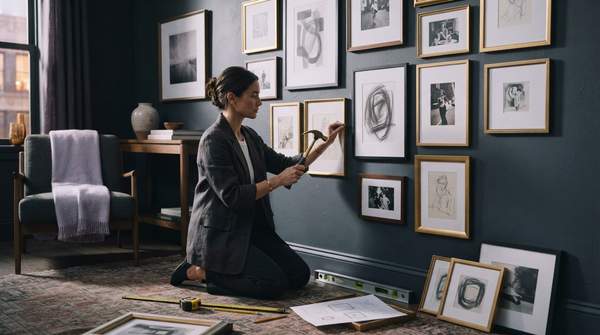
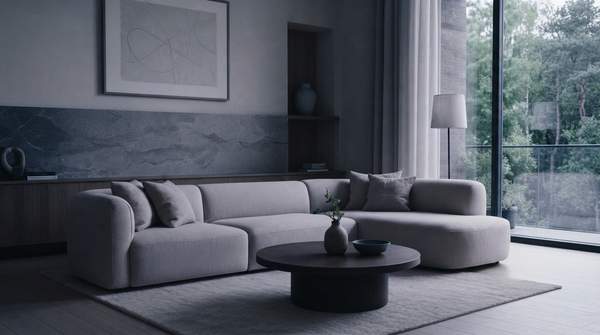
Applying the framework shows why some pairings succeed. A sleek white couch with vibrant handwoven cushions passes: the cushions are textile accents whose color sits inside the 20 percent allowance. A Warli or Madhubani painting on a bare wall passes on scale—one focal point, no competing ornament—but a second painting beside it would fail the same test. Folk art's expressive colors and strong outlines, as the art reference site Exotic India describes, create a striking presence, which is precisely why one is usually enough.
Strategies for Harmonious Integration
Two entry strategies cover most homes, and choosing between them is the first real decision.
The Neutral Foundation approach. Cover approximately 80 percent of the space with warm beiges, soft greys, or creamy off-whites, per 8TFive's guidance, and reserve the remaining 20 percent for vibrant Indian hues—indigo blue or emerald green—that serve as focal points without causing visual clutter. This suits readers who want tradition woven throughout rather than concentrated in one spot: khadi placemats and brass cutlery on a modern dining table, handwoven cushions on a plain sofa, a small brass lamp on a console.
The Statement Piece approach. Build the room around one significant traditional item. Houzz's guidance for Indian homes recommends accessorizing with a careful selection of just one or two decor elements, and folk art fits this role naturally: a detailed painting can become the focal point of a neutral room, while a simpler work complements rather than dominates. The Art Life Gallery notes that such a piece becomes a conversation starter above a console or in a meditation room, bringing meaning beyond decoration. Choose it for both visual impact and personal significance, then let the rest of the room stay quiet.
Practical Considerations for a Clutter-Free Space
Clutter is the failure mode of this fusion, and it is preventable with curation rather than restriction. Houzz's designers suggest replacing the heavy wooden showcase common in urban Indian homes with wall niches that display a small number of treasured collectibles—a structural compromise that honors the impulse to display while honoring minimalism's demand for open space. Embracing bare walls is not a deficit; it is what allows one painting to register fully.
Three boundaries keep expectations honest. This is a set of design principles, not a shopping guide—no specific product is required to execute it. It addresses aesthetic integration only, not structural renovation. And the examples cited, from Warli and Madhubani painting to brass and khadi, illustrate the method rather than exhaust India's craft traditions; the framework applies equally to traditions not named here.
Achieving Serenity: Your Next Steps
To successfully integrate traditional Indian decor, prioritize a neutral foundation and select a few meaningful statement pieces, evaluating each item using the provided framework. The measurable indicator of success is a harmonious space where Indian decor elements enhance, rather than overwhelm, the minimalist aesthetic—evidenced by visual balance and a sense of cultural richness without clutter. A practical check: after placing each new piece, step back and ask whether the room still reads as calm and bright, as Samson's pale-based home does. If the answer shifts from yes to no, the framework will tell you which dimension—color, texture, scale, or sheer quantity—broke first.
Sources
- How to design a minimalist living room perfect for Indian homes — Beautifulhomes
- Embracing Minimalism in Indian Home Design — 8TFive Studio
- Sanju Samson's Kerala home is a haven of serenity and a love… — The Times of India
- Indian Folk Art Painting: History, Styles, Regional Traditions & Cultural Meaning — Exoticindiaart
- 9 Ways to Make Minimalism Work in Indian Homes — Houzz
- Indian Folk Art In Modern Home Decor And Fashion — Art Blog