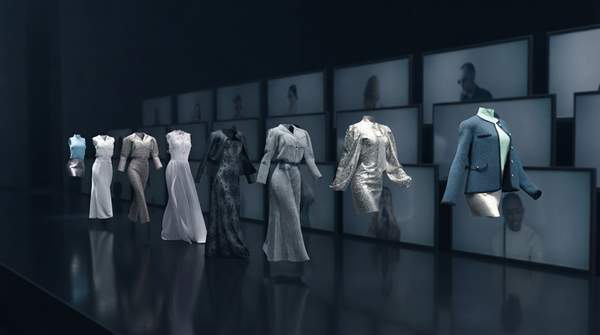
Augmented reality has moved from novelty to working infrastructure in fashion retail, and it now operates along three distinct fronts: at-home virtual try-on, in-store enhancements such as AR mirrors and smart fitting rooms, and digital-only fashion that exists beyond physical garments. Each solves a different problem. Virtual try-on attacks the uncertainty of buying clothes sight unseen, which industry reporting links to fewer returns and stronger conversion. In-store AR reimagines the physical retail visit as an interactive experience. Digital-only fashion, the least mature of the three, extends what a "garment" can be at all. The benefits are, importantly, reported industry trends rather than audited results, but the pattern across sources is consistent: convenience and confidence for shoppers, engagement and reduced returns for retailers.
The Rise of Augmented Reality in Fashion Retail
AR in fashion, as the software consultancy Frame Sixty frames it, is "the use of augmented reality to blend digital garments and accessories with real-world shopping, letting customers visualize how items look and fit before buying." That definition spans virtual try-ons, digital fitting rooms, and so-called phygital retail — experiences that merge online browsing with the physical store into one continuous journey. Flat product photos, in other words, are being replaced by three-dimensional, interactive alternatives.
The commercial case rests on reported consumer appetite. Rock Paper Reality, an AR production studio, cites survey figures indicating that 61% of shoppers prefer retailers offering an AR experience, and that 72% of luxury fashion consumers say it is important for brands to provide AR as part of the shopping experience. The same source summarizes AR's headline effects as enhanced brand awareness, improved sales, and reduced returns, with conversion rates described as much higher for AR-enabled retail experiences than for those without.
Those numbers deserve careful reading. They are industry-reported figures about consumer preference, not independently audited outcomes from named brand deployments, and the sources publishing them are companies that build or promote AR experiences. The direction of the trend is nonetheless consistent across every source consulted: shoppers increasingly expect the ability to see products on themselves, and retailers increasingly view that ability as a competitive necessity rather than an experiment.
At-Home Virtual Try-On: Convenience and Confidence
Virtual try-on is the most consumer-facing of the three categories. It works by using a smartphone camera — or, in some deployments, AR glasses — to overlay a digital representation of a garment, makeup item, or outfit onto the shopper's own body or face, no fitting room required. Writing for Program-Ace, a software development firm, Oleg Fonarov describes the mechanism plainly: when shoppers see how a product looks on themselves before buying, they order more accurately, so fewer items come back. For high-return categories like fashion and furniture, he argues, cutting returns alone often justifies the investment in the technology.
The consumer-side evidence is unusually specific. A survey conducted by Vogue Business in partnership with Snap asked shoppers why they find virtual try-on useful, and the two leading reported benefits were "being able to try on products in the comfort of my home" at 67 percent and "being able to try on as many products as I like" at 63 percent. Convenience and frictionless experimentation, in other words, outrank any single feature. As Geoffrey Perez, Snap's global head of luxury, put it: "We're not saying AR is going to replace the excitement of going into a store, but AR can certainly make stores even more exciting once customers are there."
The dual value proposition is therefore clear. Shoppers gain the ability to compare dozens of options in minutes and to purchase with more confidence; retailers gain the operational payoff — more accurate ordering, reduced return rates, and the engagement lift that interactive tools generate. Because the cited percentages describe what consumers say they want rather than what any single brand measured after deployment, retailers should treat them as demand signals rather than guaranteed returns on investment.
In-Store AR Enhancements: Interactive Shopping Experiences
The second category keeps the shopper inside the store but changes what happens there. AR mirrors, the technology consultancy Droids On Roids explains, enhance in-store shopping "by overlaying virtual outfits onto a shopper's reflection, enabling quick comparisons and personalized recommendations." A shopper standing before such a mirror can cycle through colors, sizes, and complete looks without repeatedly redressing, and receive styling suggestions generated in real time. Smart fitting rooms extend the same logic into the traditional try-on booth, blending physical and digital shopping worlds into a single, continuous experience.
Sergei Vardomatski, writing for the software firm HQSoftware, describes the same underlying shift: AR-powered apps and installations let users virtually try on clothes by overlaying 3D models onto their own bodies, and curated ensembles can even be viewed remotely — a blurring of the at-home and in-store categories, since a single client can evaluate multiple options from home before visiting the boutique to finalize the purchase.
The retailer benefit here differs from the at-home case. Where virtual try-on primarily reduces return friction, in-store AR primarily increases the value of each visit: the experience itself becomes a reason to enter the store, and the interactivity feeds the engagement metrics that retailers track. The trade-off is operational — these installations demand hardware, maintenance, and staff integration that a smartphone app does not.
Digital-Only Fashion: Exploring New Realms of Expression
The third category is the most conceptually radical: garments that exist only in digital form. Rather than helping shoppers preview a physical product, digital-only fashion treats the AR overlay itself as the product — clothing rendered onto a photo, a video call, or an AR headset, purchased and worn entirely on screen. Frame Sixty's definition of AR fashion, which encompasses digital garments and accessories blended with real-world contexts, captures this frontier, though the reporting consulted here describes the concept more fully than it documents its consumer benefits.
Rock Paper Reality's account of virtual clothing — shoppers trying on garments via smartphone or glasses, selecting items, receiving recommendations, and accessing product information — gestures toward the same space, noting that such deployments improved the shopping experience, increased revenue per customer, and reduced returns. But the sources at hand do not provide detailed, separately evidenced consumer and retailer benefit cells for purely digital garments, so this category is best understood as an emerging adjacency to the two established applications rather than a proven commercial model.
AR Applications in Fashion Retail: A Comparative Overview
The framework below categorizes the three primary applications and maps each to its mechanism and dual benefits, using only what the cited reporting supports. Cells reflect reported industry trends, not audited brand results.
| AR Application Type | How It Works | Key Consumer Benefit | Key Retailer Benefit |
|---|---|---|---|
| At-Home Virtual Try-On (VTO) | Shoppers visualize garments and items on themselves via smartphone cameras or AR glasses, trying as many options as they like without a physical fitting room. | Convenience of trying on at home; ability to test many items freely, supporting more confident purchasing decisions (67% and 63% of surveyed consumers, respectively, cited these as leading benefits). | More accurate ordering reported to reduce return rates, alongside boosted sales and engagement. |
| In-Store AR Enhancements (mirrors, smart fitting rooms) | Digital overlays in the physical store — for example, AR mirrors projecting virtual outfits onto a shopper's reflection — enable quick size, color, and look comparisons plus styling recommendations. | A more interactive, lower-friction in-store experience with personalized suggestions. | Increased sales and engagement by making the store visit itself a novel, efficient journey. |
| Digital-Only Fashion | Digital garments rendered onto a shopper's image or environment via AR rather than manufactured physically. | An emerging avenue of digital self-expression; detailed consumer-benefit evidence is not yet established in the reporting reviewed. | Not separately evidenced in this reporting; framed as an experimental frontier of AR fashion. |
Zara offers the clearest named implementation of these categories in practice. The brand began using AR in 2018, when customers could download its app, scan a sign, and virtually try on makeup and clothes, or use the tool for in-store navigation — a deployment that Rock Paper Reality credits with improving the shopping experience, increasing revenue per customer, and reducing returns. Zara's case also illustrates how the categories interlock: one app served both the at-home browser and the in-store visitor, using the storefront itself as an AR trigger.
Navigating the Augmented Future of Fashion Retail
Fashion retailers should strategically integrate AR technologies that align with their specific business goals, focusing on enhancing customer experience and operational efficiency. The decision logic falls out of the framework above: a return-heavy e-commerce operation has the strongest case for at-home virtual try-on, where the evidence chain — visualization leading to more accurate ordering leading to fewer returns — is most developed; a brand whose problem is declining store traffic has the stronger case for in-store AR, whose reported payoff is engagement and visit value; and digital-only fashion remains a speculative investment suited to brands experimenting with new forms of expression rather than optimizing existing metrics.
Whatever the choice, the measurable indicators to watch are the ones the reporting itself emphasizes: increased customer engagement metrics such as app usage and in-store interaction rates, and measurable reductions in product return rates for AR-enabled products. Those are also the honest caveats — every benefit documented here is a reported industry trend, not a quantified outcome for any particular deployment. A retailer piloting AR should instrument these two metrics from day one, so that its own data, rather than industry averages, becomes the basis for scaling the technology up or winding it down. Vogue Business and Snap's consumer survey suggests demand exists; the next milestone for any individual retailer is confirming, with its own customers, that the demand converts.
Sources
- AR in Fashion: Transforming the Industry Today — Frame Sixty
- Augmented Reality in Fashion — Rock Paper Reality
- What luxury fashion consumers want from augmented reality — Vogue
- AR in retail: uses, benefits, and examples — Program-Ace
- AR in fashion retail: real-world examples, benefits, and use cases — Droids On Roids
- How Augmented Reality (AR) Impacts the Fashion Industry — HQSoftware