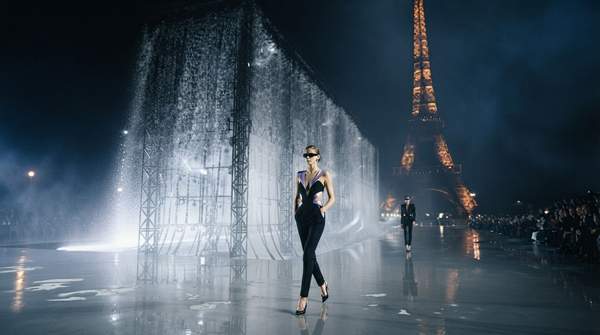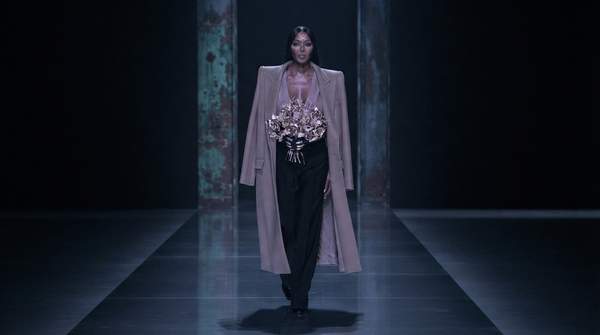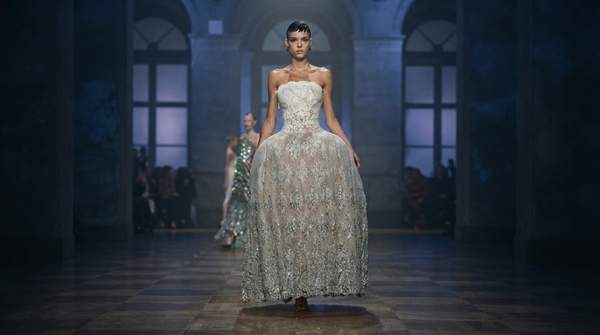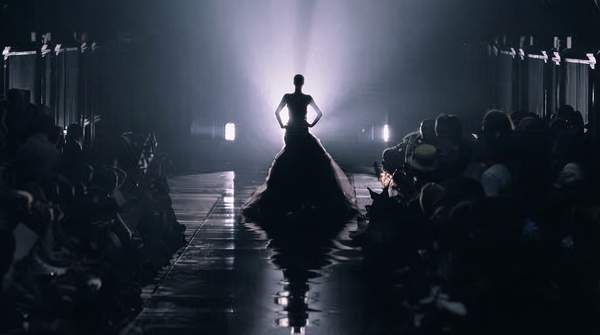
The most memorable fashion shows are rarely remembered for the clothes alone. When Karl Lagerfeld installed a full-scale supermarket under the Grand Palais for Chanel, or when Prada spent decades collaborating with the architecture firm OMA on its runway spaces, the staging became inseparable from the collection's meaning. Modern show design falls into a small number of recognizable strategies—building a fictional world, intervening architecturally in a space, or deploying technology to immerse the audience—and each choice carries a narrative purpose that a viewer can learn to decode.
The Evolution of Fashion Shows: From Salon to Spectacle
The fashion show began as a private commercial ritual. Charles Frederick Worth, the founder of haute couture, was the first to present his designs on live models in the mid-19th century, and Paul Poiret later experimented with theatrical elements around those presentations. By the early 1900s, houses organized events twice a year so that clients, buyers, and journalists could all be in town at the same time; these were intimate affairs, rarely photographed, and never public. As one historical account puts it, the shows were "not a public event by all means," reserved for journalists, buyers, and the clients themselves.
The format changed fundamentally in the 1960s with the emergence of ready-to-wear collections, which demanded broader reach than a salon could provide. After World War II, Christian Dior's New Look had already pushed fashion "from the salon into the real world," as Vogue's account of runway history describes, and the pace of magazine coverage accelerated through the following decades. By the 1990s models had become household names, and by the 2000s the internet invited the public into what had once been a closed industry event.
Digital platforms then transformed the show from an industry appointment into a global marketing spectacle. Dior's spring/summer 2021 show, which opened Paris Fashion Week, was livestreamed on a dozen platforms and viewed by 95 million people—up from 12.3 million views for the prior season's stream—while the hashtag #DiorSS21 was used 360 million times on Weibo. The Vitra Design Museum's curatorial account of the catwalk notes that interest in shows and their staging has grown enormously through channels dedicated to set design itself, and that sets are now judged by how photogenic, or "Instagrammable," they are—a pressure that has pushed brands toward ever bigger and bolder productions.